Power outages aren’t just inconvenient — they disrupt heating, refrigeration, security systems, medical equipment, and daily life. In Monmouth County, severe storms, coastal weather systems, and infrastructure strain can leave neighborhoods without power for hours — or even days.
A professionally installed standby generator gives your home something invaluable: continuity.
At Fiore Electric, we provide generator installation and backup power solutions throughout Monmouth County, including Middletown, Red Bank, Hazlet, Holmdel, Atlantic Highlands, Fair Haven, Eatontown, Matawan/Aberdeen, and Tinton Falls. We design and install systems that activate automatically, power essential systems safely, and restore peace of mind when the grid goes down.
If you’re ready to invest in generator installation for your home, this guide will help you understand what’s involved — and what to expect.
Why Backup Power Is No Longer a Luxury
In the past, generators were considered optional upgrades. Today, they’re increasingly viewed as essential infrastructure.
Modern homes depend on electricity for:
- Heating and cooling systems
- Refrigerators and freezers
- Sump pumps
- Home security systems
- Wi-Fi and communication
- Medical devices
- Garage door openers
During coastal storms in Monmouth County’s shore towns or heavy weather in Middletown and Holmdel, outages can last longer than expected.
A standby generator restores power automatically — often within seconds.
How a Standby Generator Works
Unlike portable generators, standby systems are permanently installed outside your home and connected directly to your electrical system.
The system includes:
- Generator unit
- Automatic transfer switch
- Fuel source (natural gas or propane)
- Dedicated electrical connections
When the utility power fails:
- The generator detects loss of power
- The transfer switch isolates your home from the grid
- The generator starts automatically
- Selected circuits or the entire home are powered
When utility power returns, the system switches back seamlessly.
No extension cords. No manual setup. No rushing outside during a storm.
Whole-House vs. Essential Circuit Generators
There are two primary configuration options:
Whole-House Generator
Powers your entire home, including:
- HVAC systems
- Appliances
- Lighting
- Outlets
- EV chargers (in some configurations)
Best for larger homes in Holmdel, Fair Haven, and Middletown.
Essential Circuit Generator
Powers selected circuits such as:
- Refrigerator
- Heating system
- Sump pump
- Lighting
- Internet
More budget-conscious option while still protecting critical systems.
We evaluate your home’s electrical load and help determine the appropriate system size.
Step 1: Load Calculation & System Sizing
Generator installation begins with understanding your home’s electrical demand.
We evaluate:
- Square footage
- HVAC load
- Appliance wattage
- Panel capacity
- Desired powered circuits
Oversizing wastes fuel and increases cost. Undersizing causes overload.
Proper load calculation ensures your generator performs efficiently and reliably.
Step 2: Electrical Panel Integration
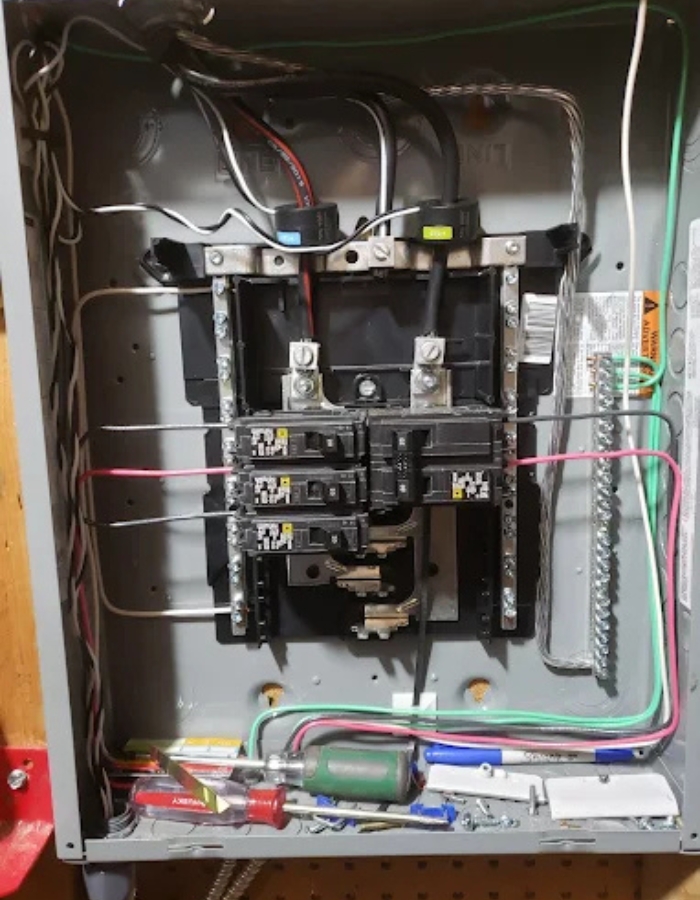
Generators must integrate safely with your main electrical panel.
This involves installing an automatic transfer switch that:
- Prevents backfeeding into utility lines
- Protects utility workers
- Complies with NEC code
- Safely transitions power sources
Homes in Red Bank and Matawan/Aberdeen often require panel evaluation before installation proceeds.
Step 3: Fuel Source Considerations
Most standby generators run on:
- Natural gas
- Propane
Natural gas systems offer continuous fuel supply if utility gas service remains active. Propane systems require tank capacity planning.
We coordinate with licensed fuel providers as needed to ensure proper connections.
Generator Installation in Coastal & Storm-Prone Areas
Homes in Atlantic Highlands and other coastal parts of Monmouth County face:
- Salt air exposure
- Storm surge risk
- Flood zone regulations
Generator placement must account for:
- Elevation requirements
- Ventilation
- Clearance distances
- Local zoning codes
We ensure installations meet municipal guidelines.
Portable Generators vs. Standby Systems
Many homeowners initially consider portable generators.
Portable units require:
- Manual startup
- Fuel storage
- Extension cords
- Manual transfer switches
- Outdoor setup during bad weather
Standby systems:
- Activate automatically
- Permanently installed
- Safely integrated
- Require no manual intervention
For families who travel or rely on consistent power, automatic standby systems provide significantly greater reliability.
Maintenance & Long-Term Performance
Standby generators require periodic maintenance, including:
- Oil changes
- Filter replacement
- Battery checks
- System testing
Many systems perform weekly self-tests automatically.
We provide guidance on manufacturer maintenance recommendations.
Common Questions About Generator Installation
Homeowners frequently ask:
- How loud are standby generators?
- Will it power my air conditioning?
- Can it run my entire home?
- What happens if the outage lasts several days?
- How often does it need maintenance?
Modern systems are quieter than older models and can be configured to power major systems depending on size.
Signs It May Be Time to Install a Generator
Consider backup power if:
- Your neighborhood experiences frequent outages
- You rely on sump pumps
- You work remotely
- You have medical equipment at home
- You store significant refrigerated food
- You want to protect your home during storms
In areas like Hazlet and Tinton Falls, where heavy rain can stress infrastructure, backup power adds protection.
What to Expect During Installation
Generator installation typically includes:
- Site evaluation
- Load calculation
- System selection
- Permit filing
- Utility coordination
- Installation of generator and transfer switch
- Inspection
- Final testing
Most installations are completed within several days, depending on fuel connections and inspection scheduling.
Investment & Long-Term Value
Generator installation is a long-term investment.
Benefits include:
- Property protection
- Prevented food loss
- Reduced flood damage risk
- Increased resale appeal
- Peace of mind
In many Monmouth County neighborhoods, backup power is becoming an expected feature rather than an upgrade.
Serving Monmouth County Homeowners
We install standby generators throughout Monmouth County, including:
- Middletown
- Red Bank
- Hazlet
- Holmdel
- Atlantic Highlands
- Fair Haven
- Eatontown
- Matawan / Aberdeen
- Tinton Falls
Our familiarity with local permitting and inspection requirements (where needed) ensures smooth approvals.
Why Choose Fiore Electric
✔ Licensed & Fully Insured
✔ Experienced in Load Calculations
✔ Code-Compliant Installations
✔ Transfer Switch Expertise
✔ Clean & Professional Work
✔ Local Monmouth County Knowledge
We design systems that perform reliably — not just during installation, but when you need them most.
Schedule Your Backup Power Consultation
Storms don’t announce themselves. Power outages rarely give warning.
If you’re considering a standby generator in Monmouth County, Fiore Electric is ready to evaluate your home and explain your options clearly.
📞 Call today to schedule your consultation
📩 Request your estimate online