Home EV Charger Installation for Your Electric Vehicle
Owning an electric vehicle changes how you think about energy. Instead of stopping at a gas station, you charge at home — overnight, conveniently, and cost-effectively.
But installing a home EV charger isn’t as simple as plugging in equipment. It requires evaluating your electrical panel, confirming load capacity, running properly rated wiring, and ensuring everything meets current code.
At Fiore Electric, we provide professional EV charger installation throughout Monmouth County, including Middletown, Red Bank, Hazlet, Holmdel, Atlantic Highlands, Fair Haven, Eatontown, Matawan/Aberdeen, and Tinton Falls. Whether you’re installing your first Level 2 charger or upgrading your electrical service to support faster charging, we make sure your system is safe, efficient, and built to handle long-term demand.
This guide will walk you through what you actually need to know about installing an EV charger at your home.
Why Professional EV Charger Installation Matters
A Level 2 EV charger typically operates on 240 volts and draws significantly more power than standard household outlets. That means:
- Your panel must have adequate capacity
- The circuit must be properly sized
- The breaker must match manufacturer specifications
- Wiring must support sustained electrical load
- Grounding must meet code
- Permit and inspection may be required
Installing a charger without verifying these factors can lead to:
- Breaker trips
- Overheated wiring
- Panel strain
- Failed inspections
- Reduced charger performance
This isn’t a DIY project — it’s a system upgrade.
Level 1 vs. Level 2 Charging: What Homeowners Need to Know
Level 1 Charging (Standard Outlet)
- Uses 120-volt outlet
- Very slow charging (2–5 miles per hour)
- Minimal electrical demand
- Best for low daily mileage
Level 2 Charging (240-Volt Circuit)
- Dedicated circuit required
- Charges 5–7 times faster
- Adds 20–40 miles per hour of charging
- Ideal for daily commuting
Most Monmouth County homeowners choose Level 2 chargers because they provide practical overnight charging for modern EV use.
If you live in Middletown, Holmdel, or Red Bank and rely on your EV for commuting, Level 2 charging is typically the most efficient long-term option.
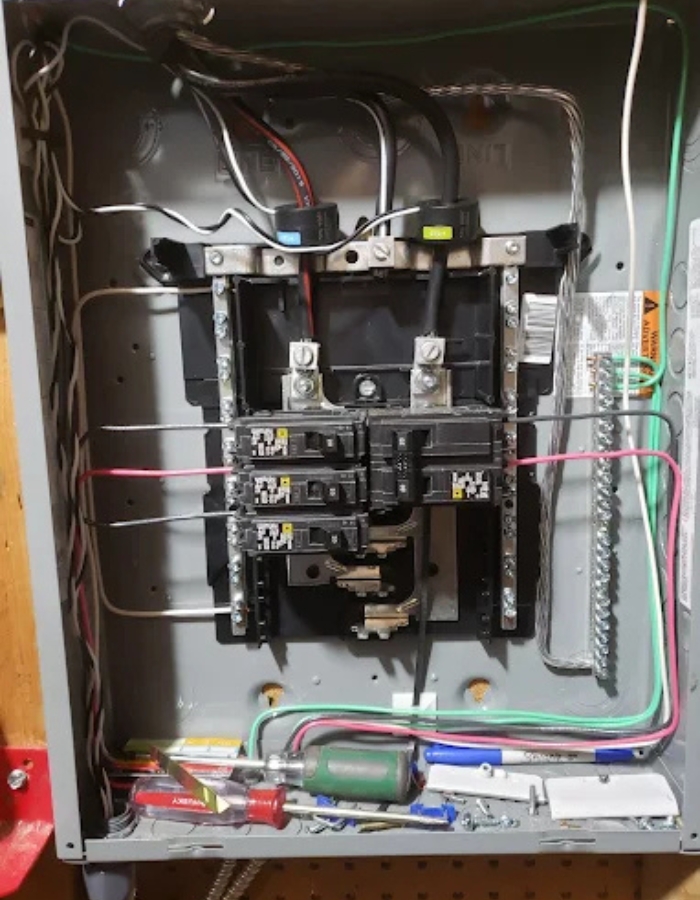
Step 1: Evaluating Your Electrical Panel
Before installing a charger, we perform a load calculation.
This determines whether your current panel can safely support additional electrical demand.
Homes across Atlantic Highlands and Fair Haven built before the early 2000s may have:
- 100-amp service
- Limited breaker space
- Near-capacity load
In those cases, a panel upgrade may be recommended.
If your home already has 200-amp service with available capacity, installation may be straightforward.
We explain your options clearly before proceeding.
Step 2: Determining Charger Placement
Placement impacts:
- Cable reach
- Garage configuration
- Weather exposure
- Conduit routing
- Visual aesthetics
Whether your charger will be installed in a garage in Hazlet or on an exterior wall in Matawan/Aberdeen, we ensure wiring is:
- Properly protected
- Weather-rated when necessary
- Cleanly routed
- Securely mounted
We also consider vehicle parking habits to ensure optimal convenience.
Step 3: Installing the Dedicated Circuit
EV chargers require a dedicated circuit — meaning the charger has its own breaker and wiring path.
This prevents overload and ensures consistent performance.
Installation includes:
- Proper breaker sizing
- Heavy-gauge wiring
- Conduit installation if required
- Grounding and bonding
- Final voltage testing
All work complies with National Electrical Code (NEC) standards and local municipal requirements.
Smart Charging & Load Management
Many newer EV chargers include smart features such as:
- Wi-Fi connectivity
- App-based monitoring
- Scheduled charging
- Energy tracking
- Utility rate optimization
In homes with limited capacity, load management systems may be used to prevent overloading during peak use.
For example, if your HVAC system and EV charger operate simultaneously, load balancing can prevent breaker trips.
We help you understand whether smart load management is appropriate for your home.
EV Charger Installation in Older Homes
Monmouth County has many older homes — especially in Red Bank, Atlantic Highlands, and Fair Haven — where electrical systems were not designed for today’s power demands.
In these homes, EV charger installation may require:
- Panel upgrades
- Service upgrades
- Subpanel installation
- Meter upgrades
We coordinate permitting and inspections to ensure the system passes smoothly.
Outdoor EV Charger Installation
Not all chargers are installed in garages.
Outdoor installation considerations include:
- Weatherproof enclosures
- Proper conduit protection
- GFCI requirements
- Secure mounting
- Local zoning rules
Coastal areas like Atlantic Highlands may require additional corrosion-resistant materials.
Permits & Inspections in Monmouth County
EV charger installation typically requires:
- Electrical permit
- Inspection approval
- Utility coordination (if service upgrade required)
We handle the permitting process to ensure compliance with local municipalities across Monmouth County.
This protects homeowners during resale and insurance reviews.
Cost Considerations
EV charger installation costs vary depending on:
- Panel capacity
- Distance from panel to charger location
- Whether a service upgrade is required
- Type of charger
- Mounting complexity
We provide transparent estimates after evaluating your system.
Planning for the Future
Many homeowners ask whether they should install a charger now or wait.
Consider installing if:
- You plan to purchase an EV within 12–24 months
- You’re upgrading your panel
- You’re renovating your garage
- You want to increase resale appeal
Homes equipped with Level 2 charging are increasingly attractive to buyers.
Serving Monmouth County Drivers
We install EV chargers throughout:
- Middletown
- Red Bank
- Hazlet
- Holmdel
- Atlantic Highlands
- Fair Haven
- Eatontown
- Matawan / Aberdeen
- Tinton Falls
Because we work locally, we understand municipal inspection processes and common panel configurations in area homes.
Frequently Asked Questions
Do I need to upgrade my panel for EV charger installation?
Not always. A licensed electrician performs a load calculation to determine if your current service can support the charger safely.
How long does installation take?
Most installations can be completed in one day. If a service upgrade is required, timing may extend due to permitting and inspections.
Can I use my EV charger outdoors?
Yes, many chargers are rated for outdoor installation when properly mounted and protected.
Will installing a charger increase my electric bill?
Charging does increase electricity usage, but many homeowners offset costs by charging overnight during lower utility rates.
Do you install Tesla Wall Connectors?
Yes. We install Tesla Wall Connectors and other major Level 2 charging systems.
Why Choose Fiore Electric for EV Charger Installation
✔ Licensed & Insured
✔ Experienced in Residential Electrical Upgrades
✔ Code-Compliant Installations
✔ Panel Load Evaluation Before Installation
✔ Clean & Professional Workmanship
✔ Local Monmouth County Expertise
We don’t just mount equipment — we ensure your electrical system is prepared to support it safely.
Schedule Your EV Charger Installation
Charging at home should be convenient — not complicated.
If you’re ready to install a Level 2 charger in Monmouth County, Fiore Electric is ready to help.
📞 Call today to schedule your evaluation
📩 Request your estimate online